Month: September 2016

A Very Pinteresting Idea

For this week’s GTD topic, I decided to explore the world of Pinterest. I have been told for years by my fellow teachers that Pinterest was a great way to gather ideas for lesson plans and to organize them with pins.

Upon joining Pinterest, I followed five topics. They were Geography, American History, World War II, Education, and History. These are subjects I teach and need help with from time to time. I was able right away to find some good ideas for teaching the five themes of geography. There were plenty of lesson plans available which were very helpful. I was impressed with this part of the assignment.

Logging in a few days later, I became less impressed. I was very shocked to discover that the World War II topic generated pins on my home feed with extremely graphically violent photographs. Do not get me wrong, as a history teacher I do not believe history should be censored. However, I feel strongly that people need trigger warnings about what they are going to see. I do not believe that I or anyone else should be greeted with graphic violence upon logging into Pinterest.

Overall, I will probably keep using Pinterest for lesson ideas. However I did need to unfollow the World War II topic. I think Pinterest can be a great tool for collecting and organizing, but it should be used carefully.
Networked Learning Project #2

This week I began to work on restoring the Nintendo.

In my google searches, I found many detailed guides on how to replace this part, such as this wonderfully detailed guide from iFixit. However, there were parts of this guide I didn’t like. I did not like how I had to disconnect the controller ports and power buttons. These features are hooked into the motherboard with the type of clip that is very hard to disconnect and reconnect.

Instead of using the iFixit guide, I found an alternative guide from Hitgaming. I like this guide for a couple reasons. First, it shows an alternate way to replace the 72 pin connector without disconnecting the controller ports. Second, it offers page by page instructions instead of displaying it all on one page. It helps to cut down confusion and keep me on track.

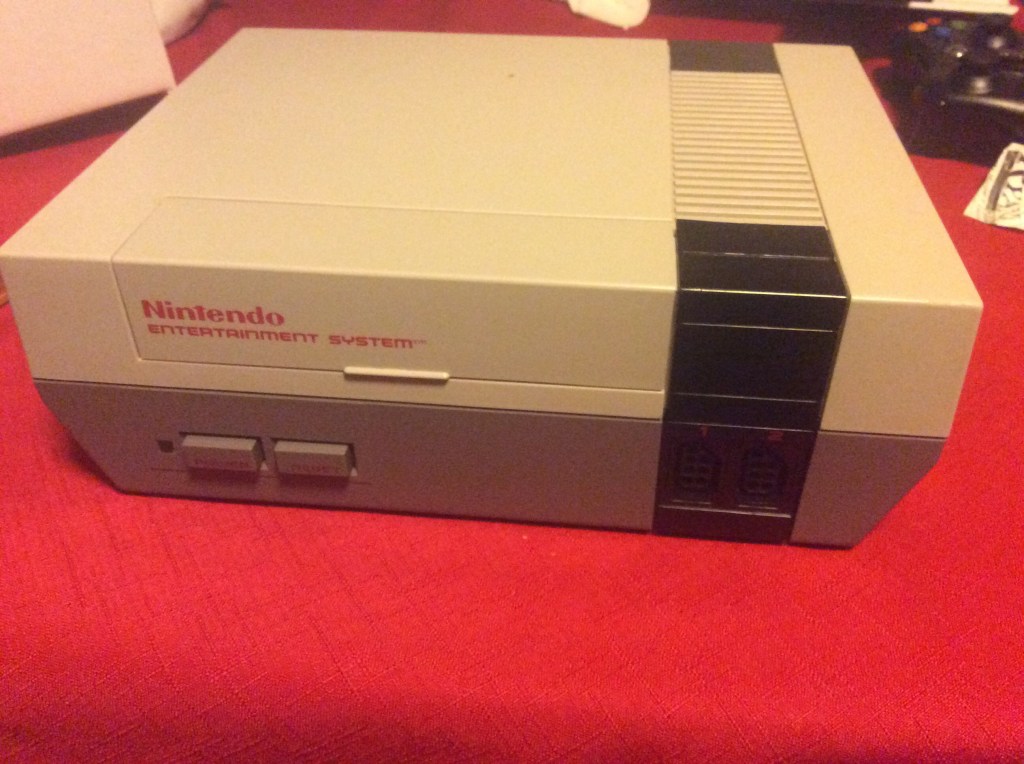
The first step towards completing this project was to locate my NES. After an hour of searching, I found it exactly like I remembered.

image

The second step was to order the necessary part. I found the 72 pin connector on eBay. It cost me a total of $8.48. By comparison, a working Nintendo would cost upwards of $50.00. The part will arrive on Thursday, September 29th.

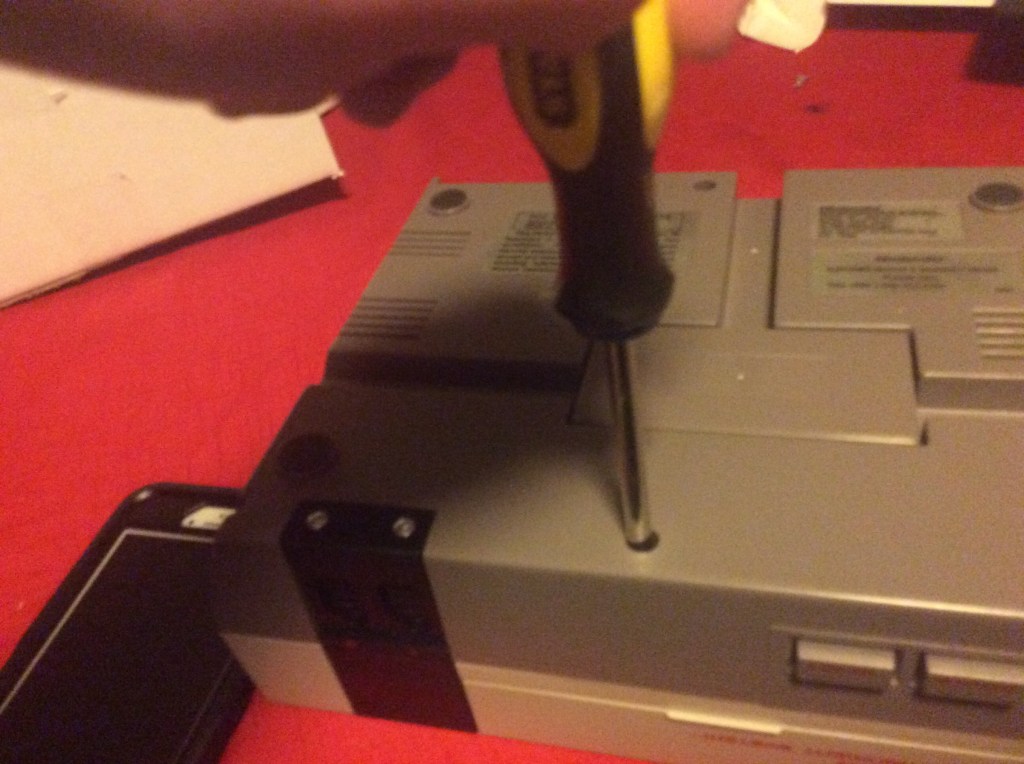
I decided to take off the back to look inside. This is where I ran into a brief amount of trouble. It turns out that my selection of Phillips head screwdrivers is not quite what Nintendo had in mind. You can see in this Vine how well that went.

After borrowing a better screwdriver from a friend I got to work.

image

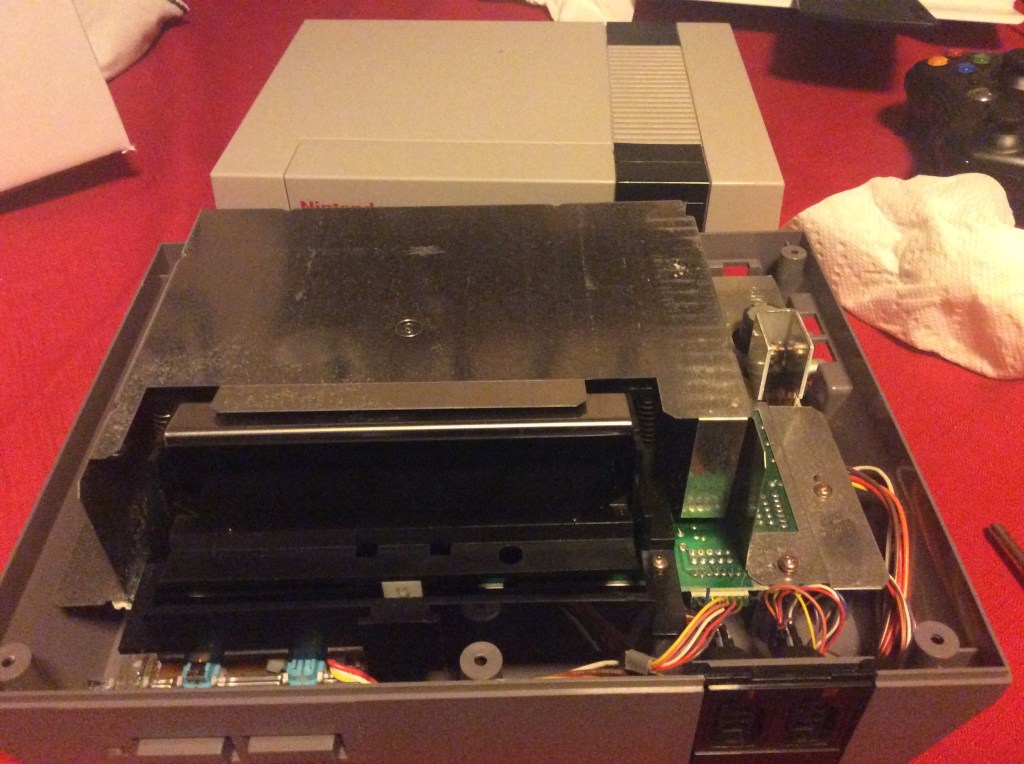
I got my first look inside. I realized it is incredibly dusty.

image

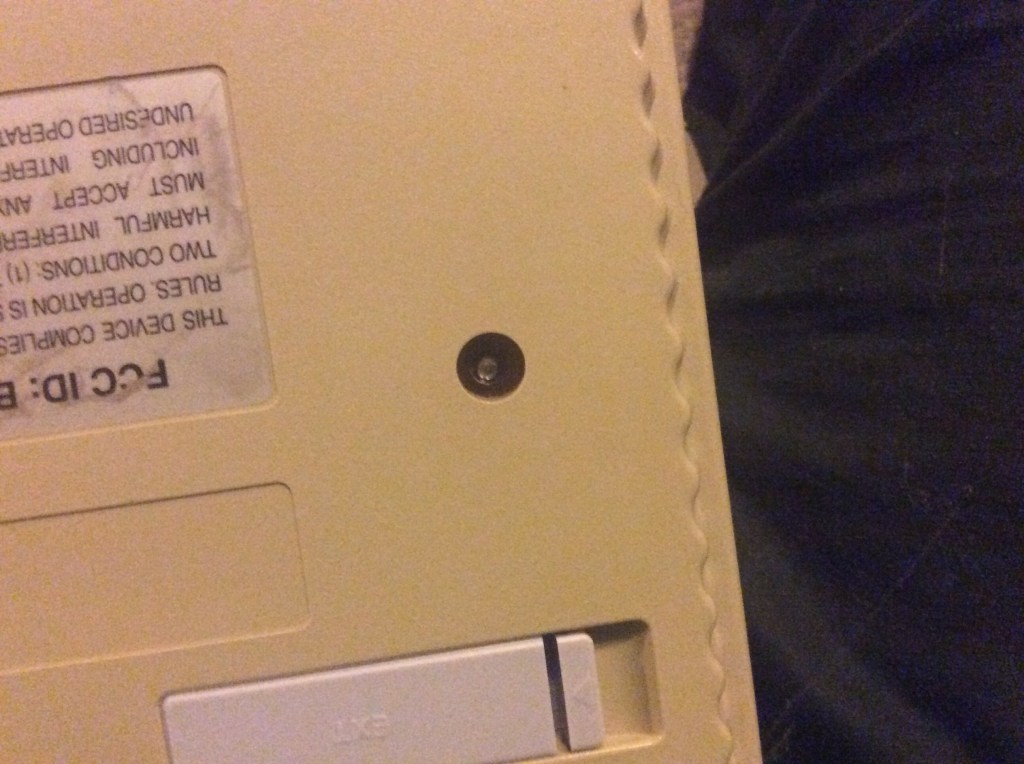
It is also beautifully simple. It was suggested that I look into widening this project to fix other systems. I would love to, but the truth is I can’t. The NES was the first and last system you could really do the work on yourself. Nintendo realized almost immediately that it could make more money by creating special screws for their systems. The only way you could it up was with a special tool that was only provided to Nintendo and repair shops who paid a licensing fee. You can see a picture of it here on my Super Nintendo.

image

The NES was so simple yet so complex that it completely changed the game. I am leaving you here for this week. For the final blog post, I will remove the old parts and replace them with new parts. My Nintendo will live again.


Professional Learning Networks

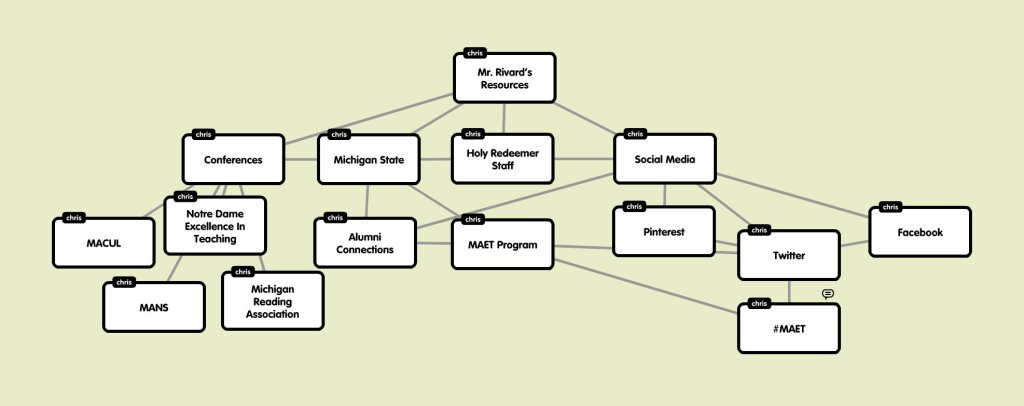
To explain where I get my teacher resources from, I have created a Popplet of my professional learning network. Here it is.

the-resources-tree

As you can see, most of my resources link together. In today’s digital world, professional learning networks can be accessed from pretty much anywhere.There is now a sense of connectivity between these networks that were once separated. Seeing this tree in it’s present form helps me to understand how I can always reach out for ideas to different groups.

Network Learning Project: How to Repair a 31 Year Old Computer.

In today’s world video games are everywhere. When our students are not in school, they are most likely gaming.A whole industry of Let’s Play videos have taken over YouTube. It is hard to image that 31 years ago, it very much appeared that the medium of video games was dead.

The first and second generations of video games were dominated by Atari. Although innovative, Atari had very little quality control mechanisms in place. In 1983, Atari released a licensed video game version of E.T. It was supposed to be the ultimate Christmas present. Instead, it was a disappointment that saw millions of copies returned to the stores in a week. The failure of this high profile of a game caused a massive market crash that endangered the video game industry and nearly bankrupted Atari.

The industry remained in trouble until 1985. That was the year the Nintendo Entertainment System came out. It was fun to play, had novel games, and boasted quality control that made sure every experience was a good one. It saved the video game industry. My older sister Katie received her Nintendo the year it came out. As a child I loved playing with it. It was my introduction to a whole new world of video gaming.

The best part about these systems is that they were built to last. My 1985 Nintendo worked until 2010.Even though it has not worked in 6 years, I have never been able to bring myself to get rid of it. For this project, I began looking into the feasibility of repairing it.

As part of the research into this idea, I came across several sources that stated that most problems with the Nintendo were caused by a part known as the 72 pin connector.It is the part that connects the game cartridge to the system. After 31 years of use, it is prone to rusting. I have discovered that these parts are cheap and easily replaced. I have found two sources with two different methods on how to fix the 72 pin connector.

The first source describes how to clean and repair the Nintendo without replacing the part. I am not sure if this source qualifies for this assignment as it is on a blog and not necessarily a help forum.

The second source i have found is a YouTube video by the user quickfreeze4. that shows me how to replace the part. I am planning on using this video.

I will check back in a few weeks to update everyone on how this is going!

Learning: A Study in Successful and Unsuccessful Setting

For this assignment, I wrote about what learning means and how it has related to each of my previous schools. I took a look at where it was successful in my past and where it was unsuccessful. I pointed out how each school failed and succeeded in promoting learning. At the end I wrote about how technology made a major difference in the schools. You can read my essay here.